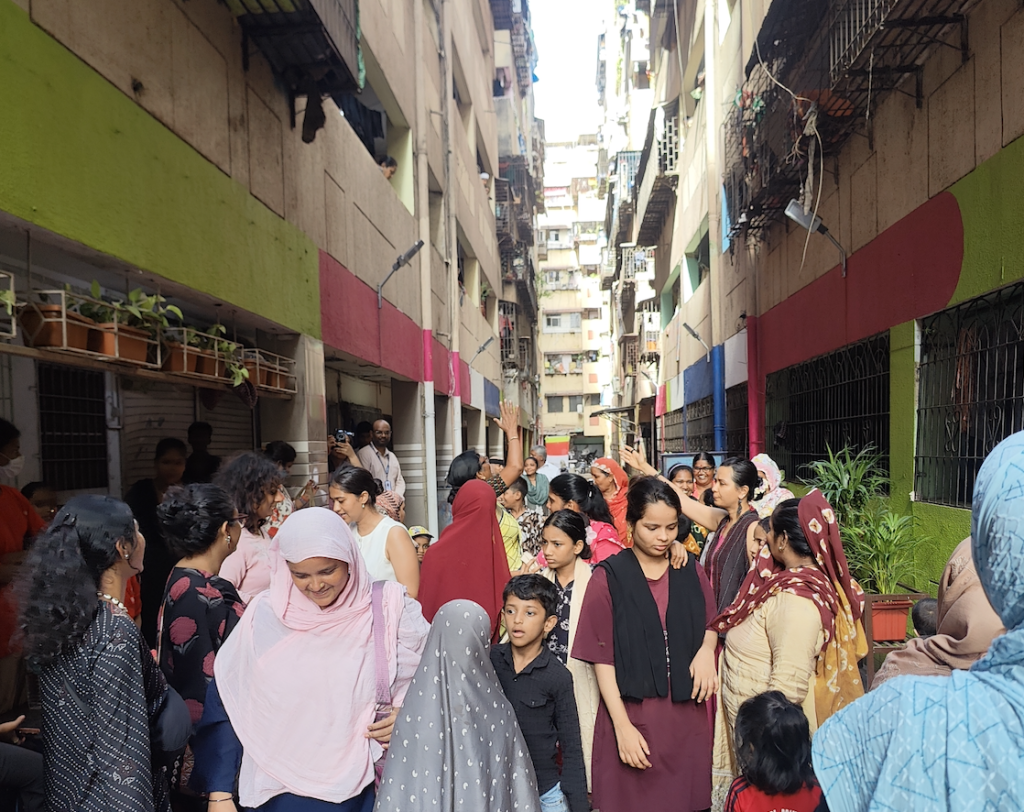
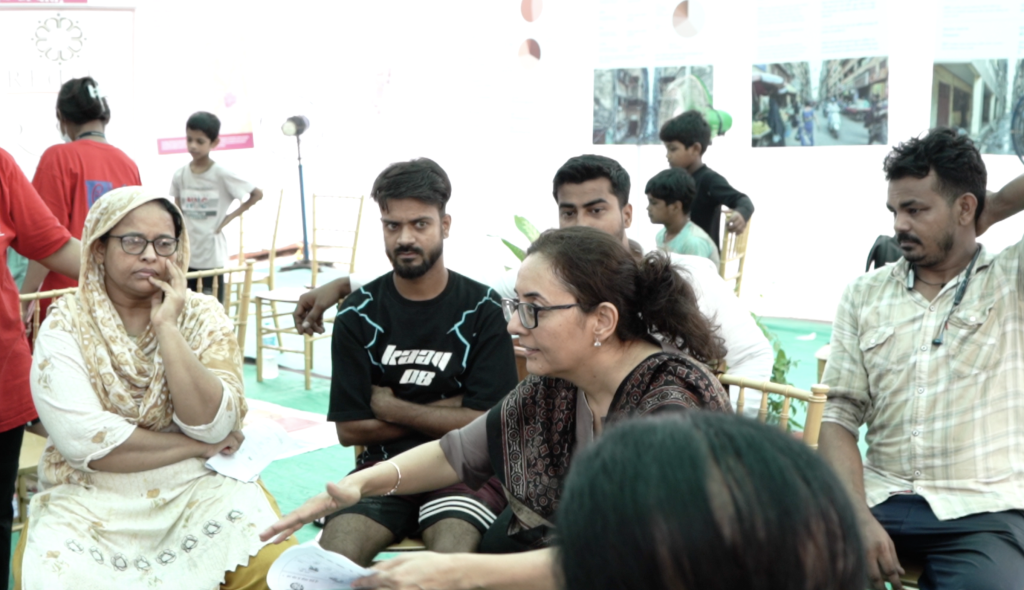
| Here’s our story from Govandi, one of the large slum and pavement dwellers’ resettlement colony in Mumbai. We’ve just taken our first collaborative steps to improve health there, and it felt like the beginning of a movement.
When you think of Mumbai, you think of the sea, skyline, trains, pace, and ambition. But there is another Mumbai that rarely comes to the front, the resettlement neighbourhoods that house many of the city’s gig workers, cab drivers, domestic workers, delivery partners, and office support staff, the people who keep the city running.
The Natwar Parekh Colony, in Govandi, M/East Ward, is one such large resettlement colony of over 25,000 residents tightly across a small 5-hectare land area in Mumbai. A recent baseline research by Tata Institute of Social Sciences and Community Design Agency, showed that 22% of families report diabetes, nearly double India’s national adult prevalence of 11.4% (ICMR–INDIAB study). Add to that, 38% of families here report heart-related illness. Across the city, BMC health data shows that 60% of Mumbaikars struggle with weight-related issues that raise their risk of diabetes. This is one of Mumbai’s most vulnerable communities, with long-standing gaps in planning, services, and health-promoting public spaces. This is where diabetes prevention needs to begin and we showed up with friends. Community Design Agency (CDA), and Catalyst Now India, curated Sehat Ki Baat, Saath Saath, an on-ground community health program in Govandi. Arogya World India Trust participated along with other community organisations such as VisionSring Foundation, Doctors For You, Myna Mahila Foundation, Every Infant Matters Centre for Social and Behaviour Change Communication, and Rangoonwala Foundation (India). It was an experimental collaboration to understand what prevention should look like when it is rooted in a community’s lived reality and connected to city-wide ambition. The pilot brought together community design, health screenings, nutrition education, and digital continuity.
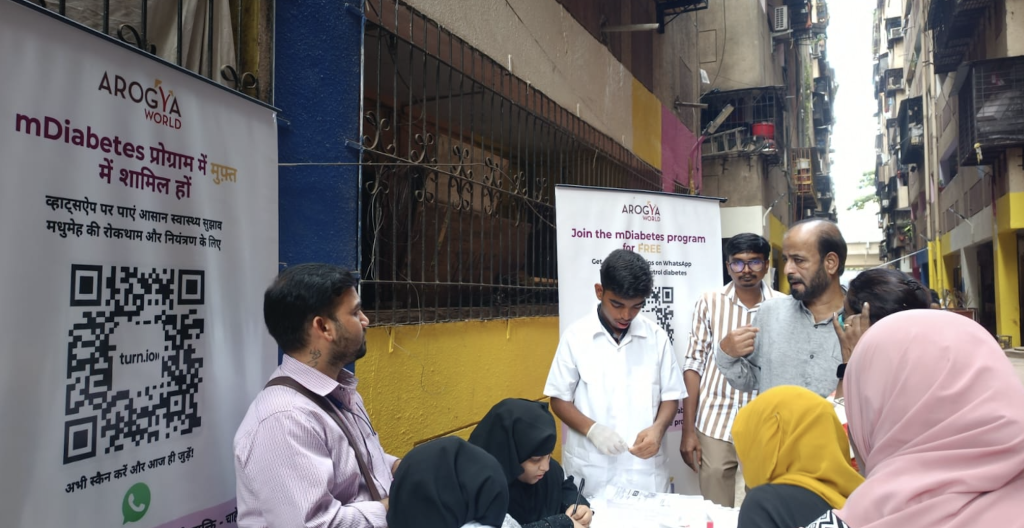
We set up our booth along with others in the reclaimed street lanes the Natwar Parekh Compound. We partnered with Siddhi Pathology Laboratory who ran random blood sugar levels screening for close to 200 residents while we enrolled the participants into our mDiabetes program for continued WhatsApp-based support that keeps the health conversation going long after the event ends.
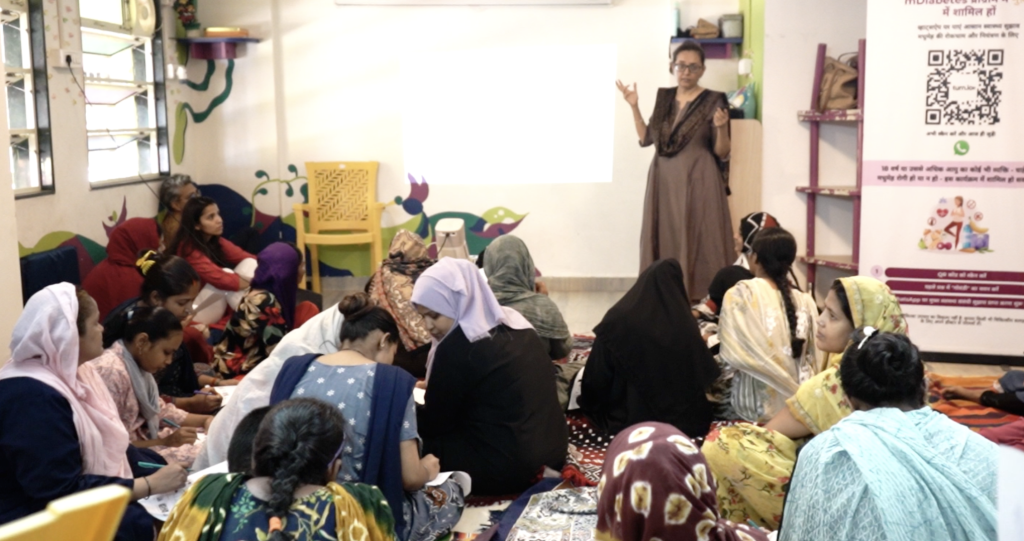
We engaged nearly 100 women and adolescent girls through MyThali nutrition conversations on balanced meals, portion control, iron-rich foods, food labels, and everyday choices that reduce disease risk.
We also engaged with 11 local street food vendors and focused on teaching them how to reduce excess salt, sugar, unhealthy fats, and not re-using oil multiple times, in their food preparations. Our Arogya World India Trust President, Sunish Jauhari shares, “Sehat Ki Baat, Saath Saath is a powerful community-led initiative by Community Design Agency emerging from Govandi, one of Mumbai’s most underserved neighbourhoods. We are glad to be part of this collaborative effort and learn alongside community leaders who understand local realities best, and contribute with NCD prevention interventions. This partnership reflects our larger vision of bringing together corporations, institutions, academia, government, civil society, and community organisations to build a city-wide health model.” Govandi is helping us understand how we can bring urgent preventive healthcare into dense, low-income city settlements. We plan to build on the learning from Govandi to create a city-wide model focused on collaboration, local ownership, measurable outcomes, and prevention that reaches people before diabetes takes hold. We see Govandi as the precursor to Arogya City Mumbai. |