| Street food is where urban India eats, before office, after school, and between shifts. A small corner food cart serves over 100 people a day and in a city like Bengaluru there are over 200,000 street food vendors serving millions every day. Street food vendors are the shapers of a city’s health.
Yet nutrition programs and knowledge rarely reaches them. Such as repeated oil reuse can produce harmful compounds and increase cardiovascular risk. Excess salt is a major driver of hypertension and stroke. Refined ingredients, high oil use, and limited nutrition awareness can add to the burden of diabetes, heart disease, and other NCDs.
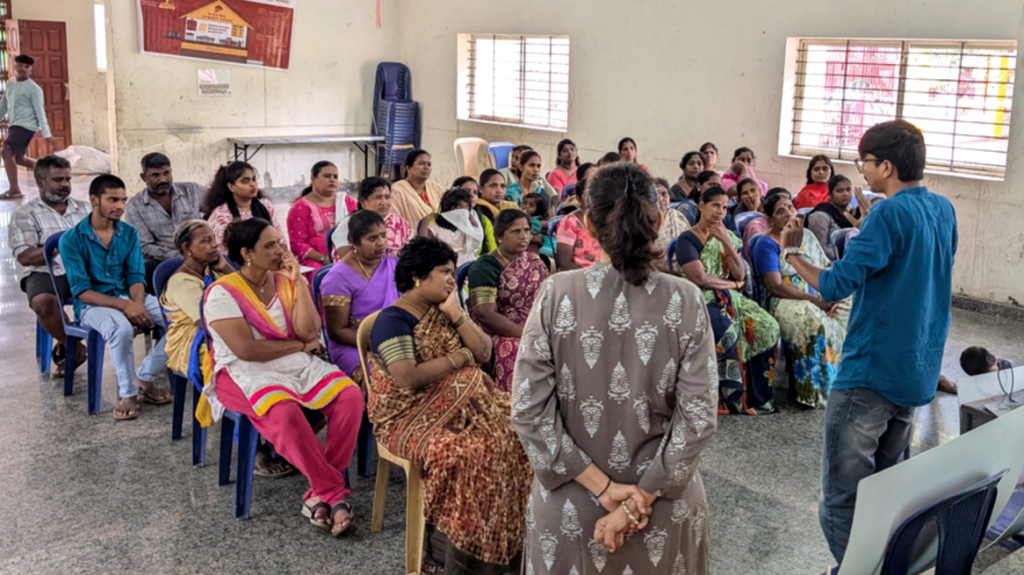
Hence our MyThali team trained 500 vendors across seven Bengaluru locations on healthier cooking. Many vendors had limited formal education, so the intervention had to be visual, practical, and easy to use in a real stall. We delivered a practical training module aligned with NIN and ICMR dietary guidelines. Through Kannada, visuals, and practical training we led the vendors to understand why to reduce oil reuse, moderate salt, choose better ingredients, and link cooking to diabetes, hypertension, and heart disease.
And now we’re excited to share our study, “Empowering Street Food Vendors on Nutrition and Healthy Cooking Practices in Urban Bengaluru: A Mixed-Methods Evaluation of a Community-based Intervention,” has been published in the International Journal of Community Medicine and Public Health (IJCMPh).
The study evaluated the intervention with 500 street food vendors across seven high-footfall locations in Bengaluru – Anjanappa Gardens, Giripuram, Vinayaka Nagar, Majestic, Hegganahalli, Neelasandra, and Shivaji Nagar. We implemented it as part of Arogya City Bengaluru, in collaboration with NIDAN, a local vendor welfare organisation.
The results are encouraging.
Awareness of the recommended daily salt intake increased from 42% to 79% after the intervention. Knowledge of recommended oil intake rose from 26% to 69%. Vendors also became more aware of the risks of repeated oil reuse, including its links to high blood pressure, heart disease, cancer risk, and obesity. We also saw important shifts in understanding healthier ingredients. Recognition of wheat flour as a healthier alternative to refined flour increased from 64% to 96%, and awareness that coconut and groundnut oils are healthier than vanaspati or palm oil increased from 89% to 99%.
Six months later, about 80–85% of participants could still recall core messages related to oil reuse, salt reduction, and healthy cooking practices. Several vendors reported adopting positive changes, including switching from palm oil to sunflower oil, using pink salt instead of refined salt, and maintaining better hygiene in their cooking areas. Some also began applying the lessons at home for themselves and their families.
Some vendors wanted to make healthier changes but faced real constraints like higher costs of healthier oils, customer resistance to changes in taste, ingrained cooking routines, and lack of incentives. Ten months later, our field observations showed that while knowledge retention remained strong, consistent behaviour change was harder to sustain without continued reinforcement.
Scaling the program require refresher trainings, visual reminders, recognition systems, economic support, and stronger integration with food safety and vendor licensing frameworks. The program results have already proven that when vendors are trained respectfully, practically, and in their own language, knowledge improves, and even practices begin to shift.
If we really want healthier cities, we cannot only talk to consumers.
We have to talk to the people cooking for them. |